Home / Gilled mushrooms on wood / TM0031
Orange-gilled bracket on a log
Tapinella or Phyllotopsis Genus
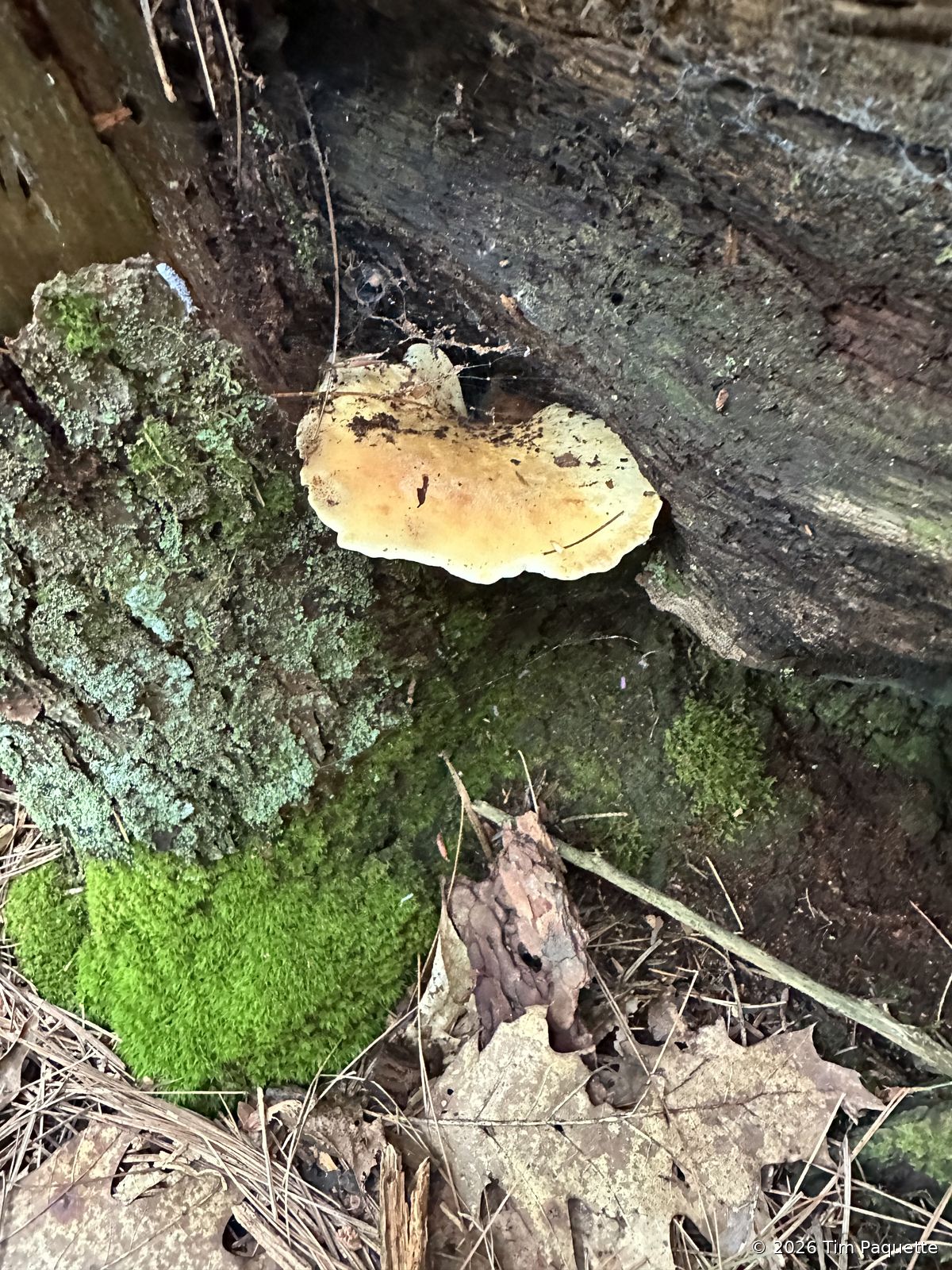
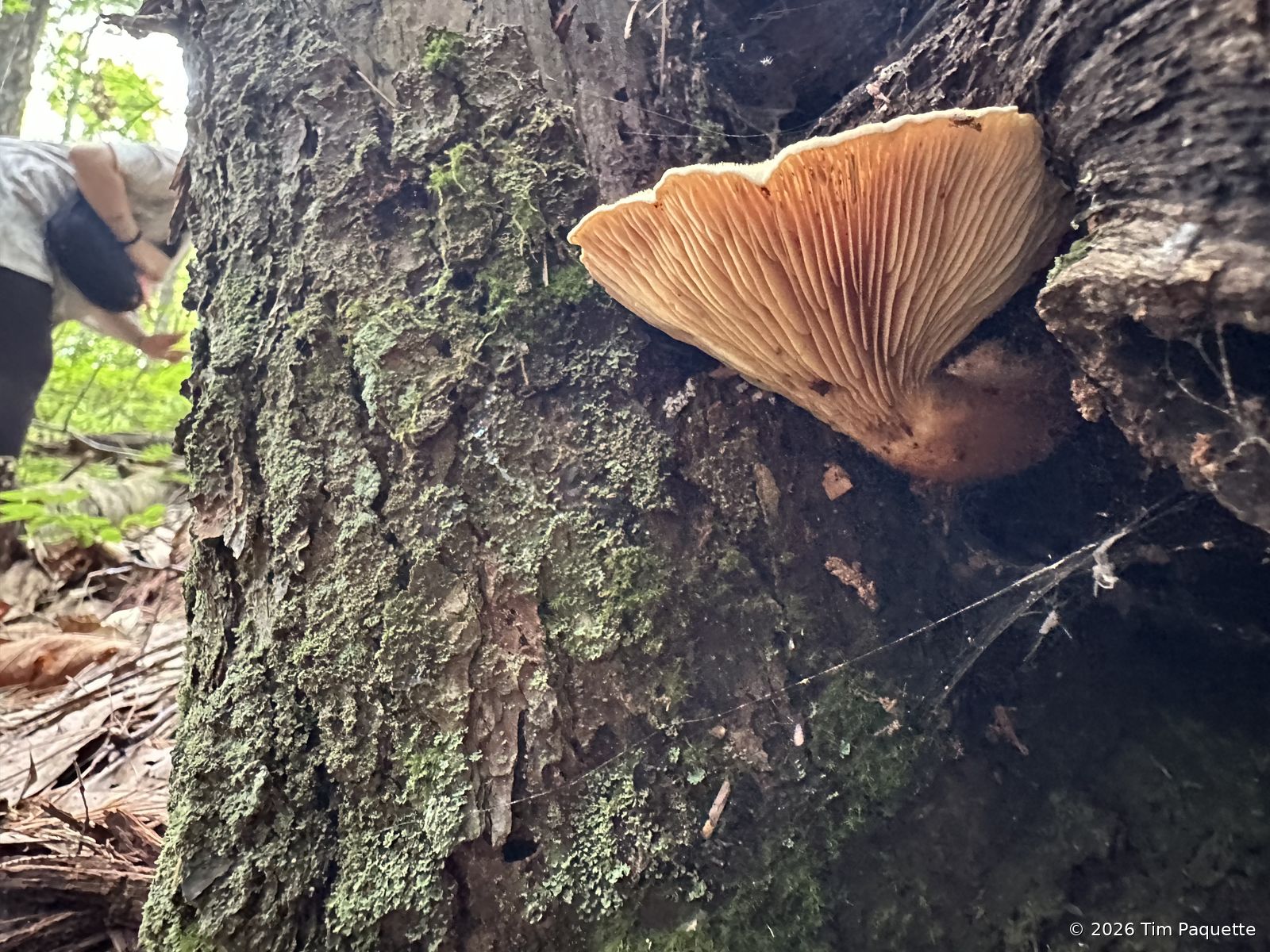
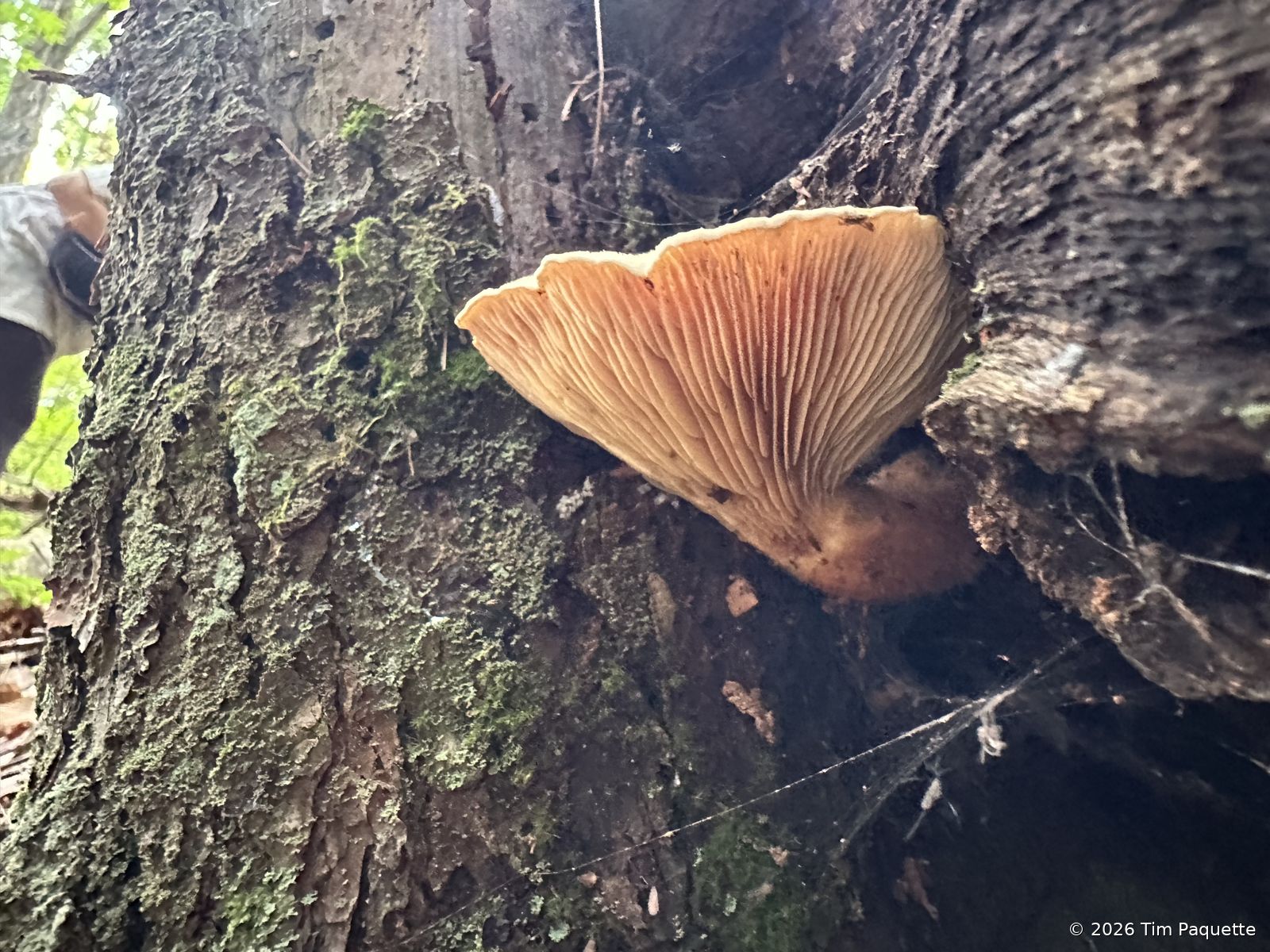
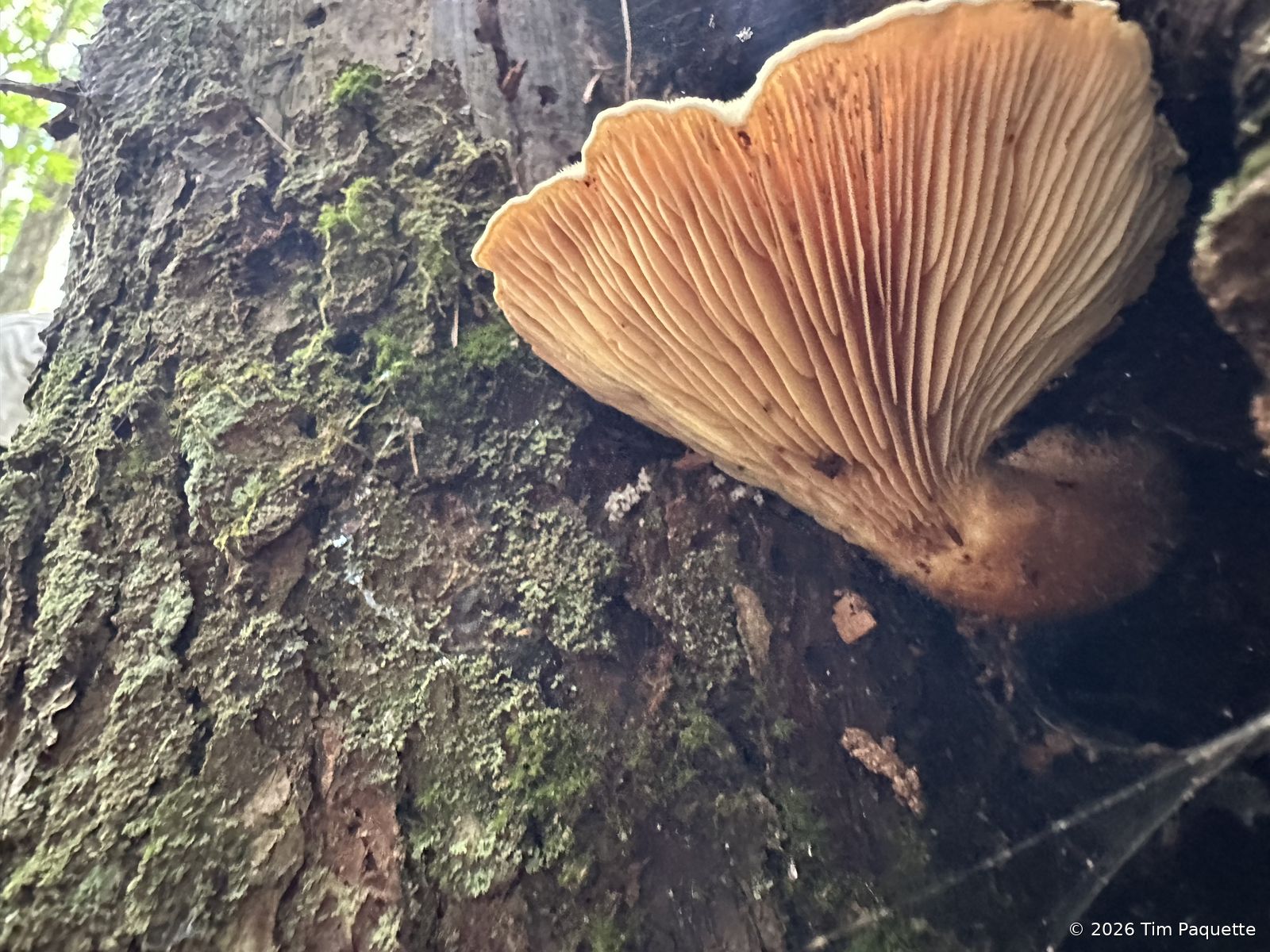
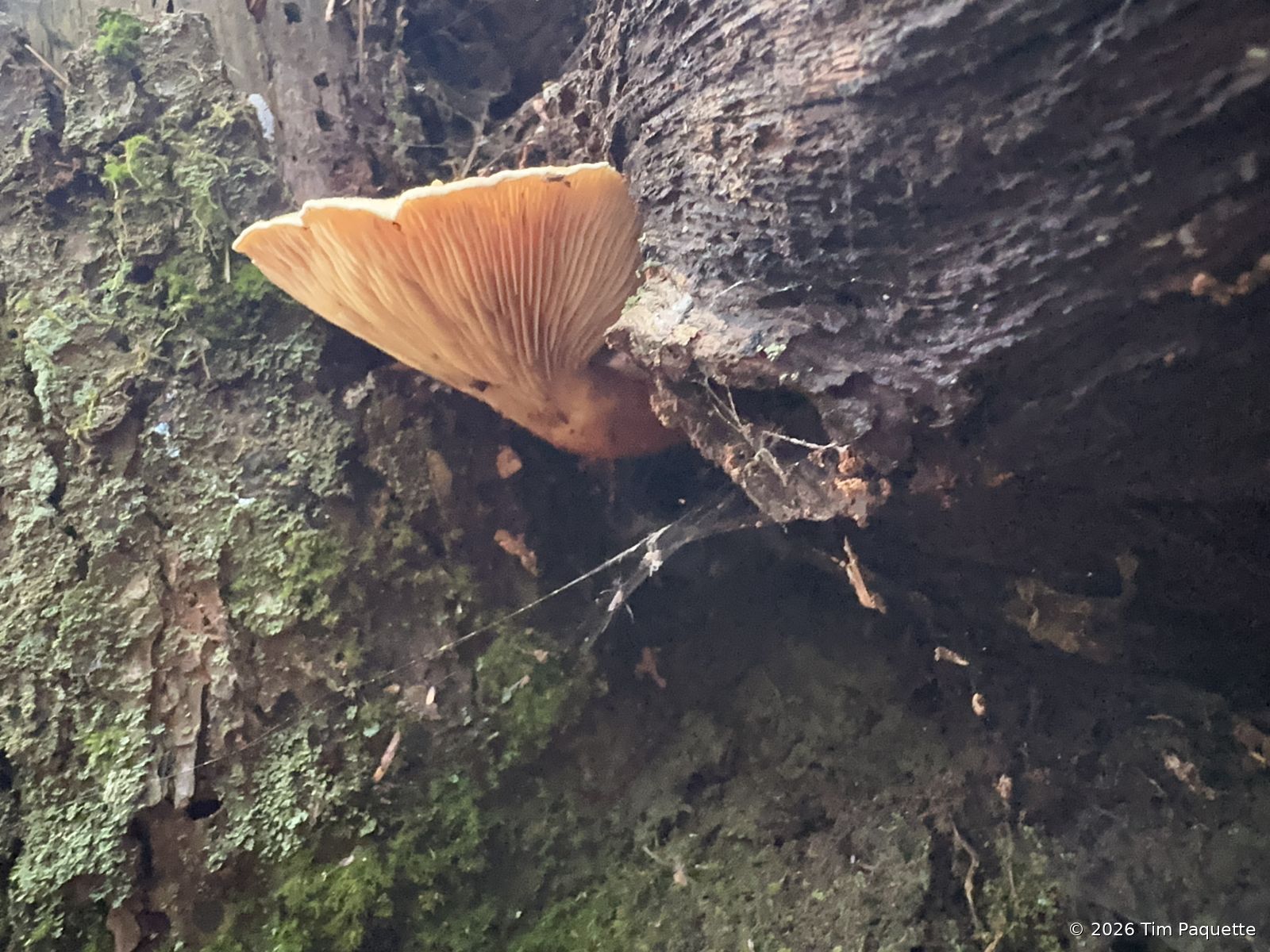
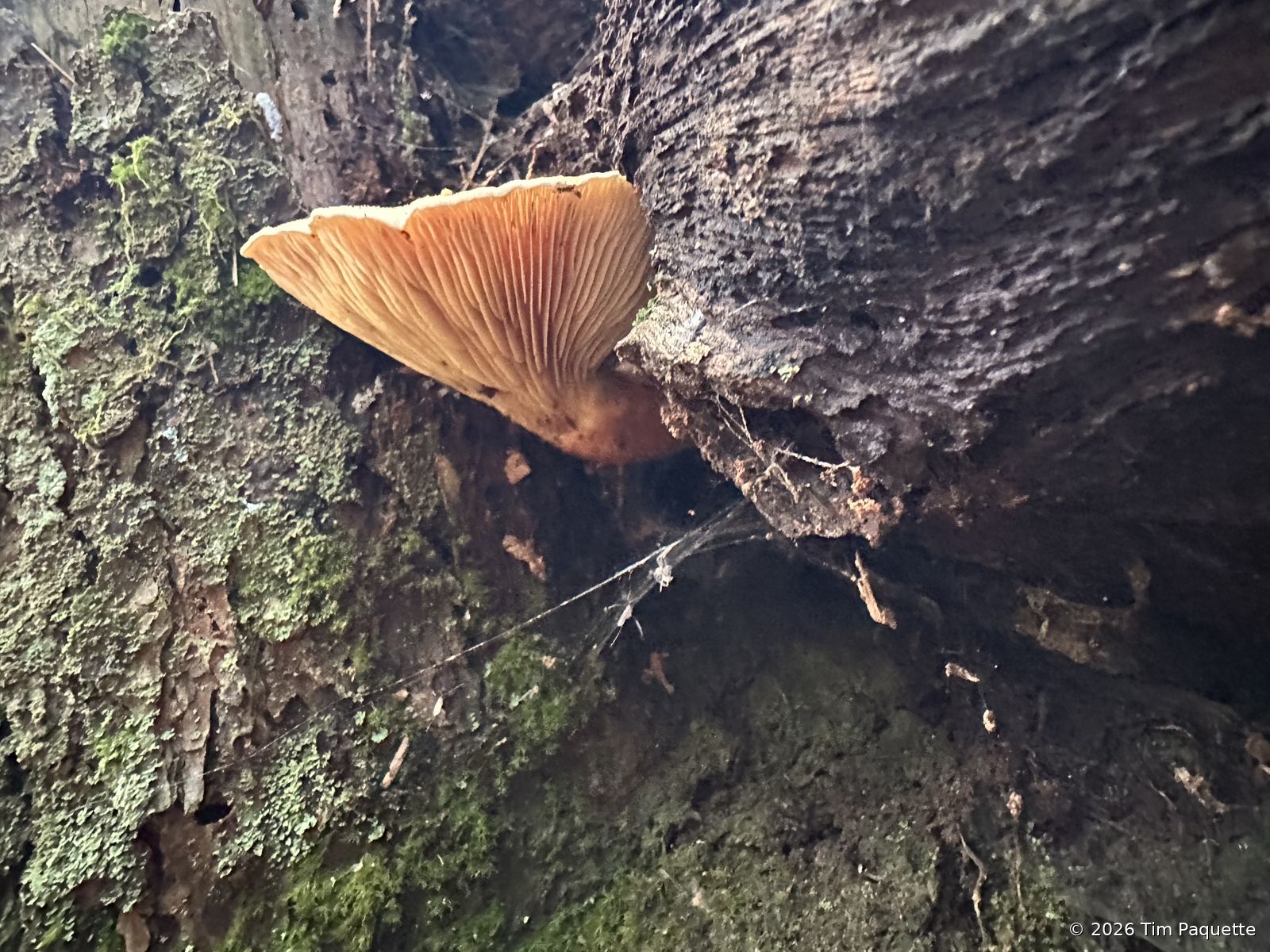
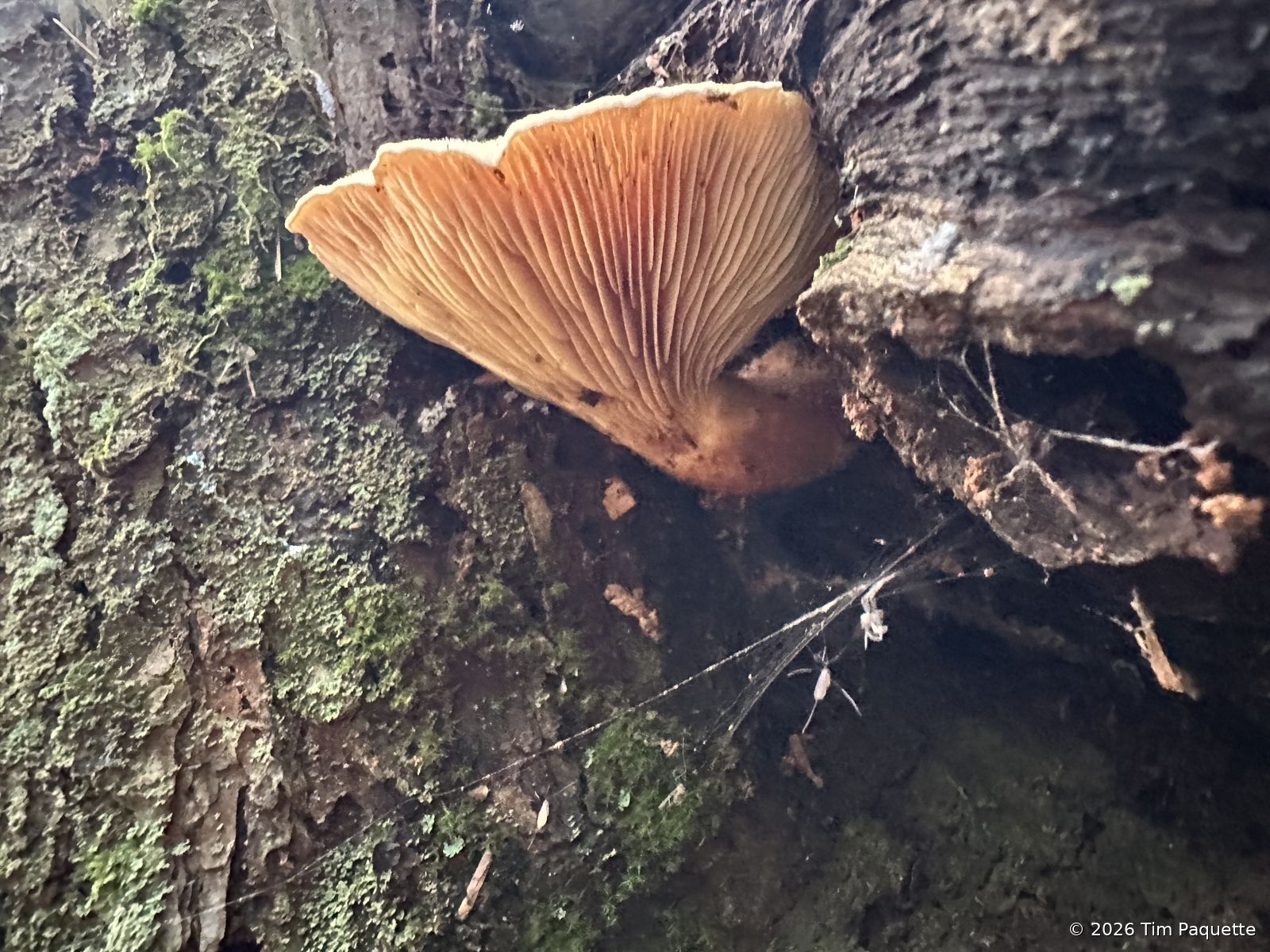
Angles captured. Seven frames, most looking directly up at the underside — unusually good coverage of the fertile surface.
Morphology
A fan-shaped to shell-shaped bracket 8–10 cm across, projecting laterally from the log with no stipe at all. Upper surface pale buff and finely felted. Underside covered in strongly developed, crowded, deep orange-buff gills that radiate from the attachment point and fork repeatedly. Flesh soft and pliable.
Habitat & substrate
On the underside of a large decaying hardwood log, moss and lichen on the same surface. Saprotrophic.
Lookalikes & what rules them out
A stipeless bracket with true orange gills is a narrow field. Tapinella panuoides (oyster rollrim) and Phyllotopsis nidulans (orange mock oyster) are the leading candidates; Phyllotopsis is usually a more saturated orange all over and has a notably unpleasant smell.
To confirm this identification
Smell it. Phyllotopsis nidulans is memorably foul — often compared to rotting cabbage. That alone would separate the two.
Notes
A good example of shooting the diagnostic surface: five of the seven frames show the gills.
Found at Elm St area, Leominster, MA on Thursday, 6 August 2026 at 10:36. See the full walk for that day's weather and everything else recorded.
Others in this group
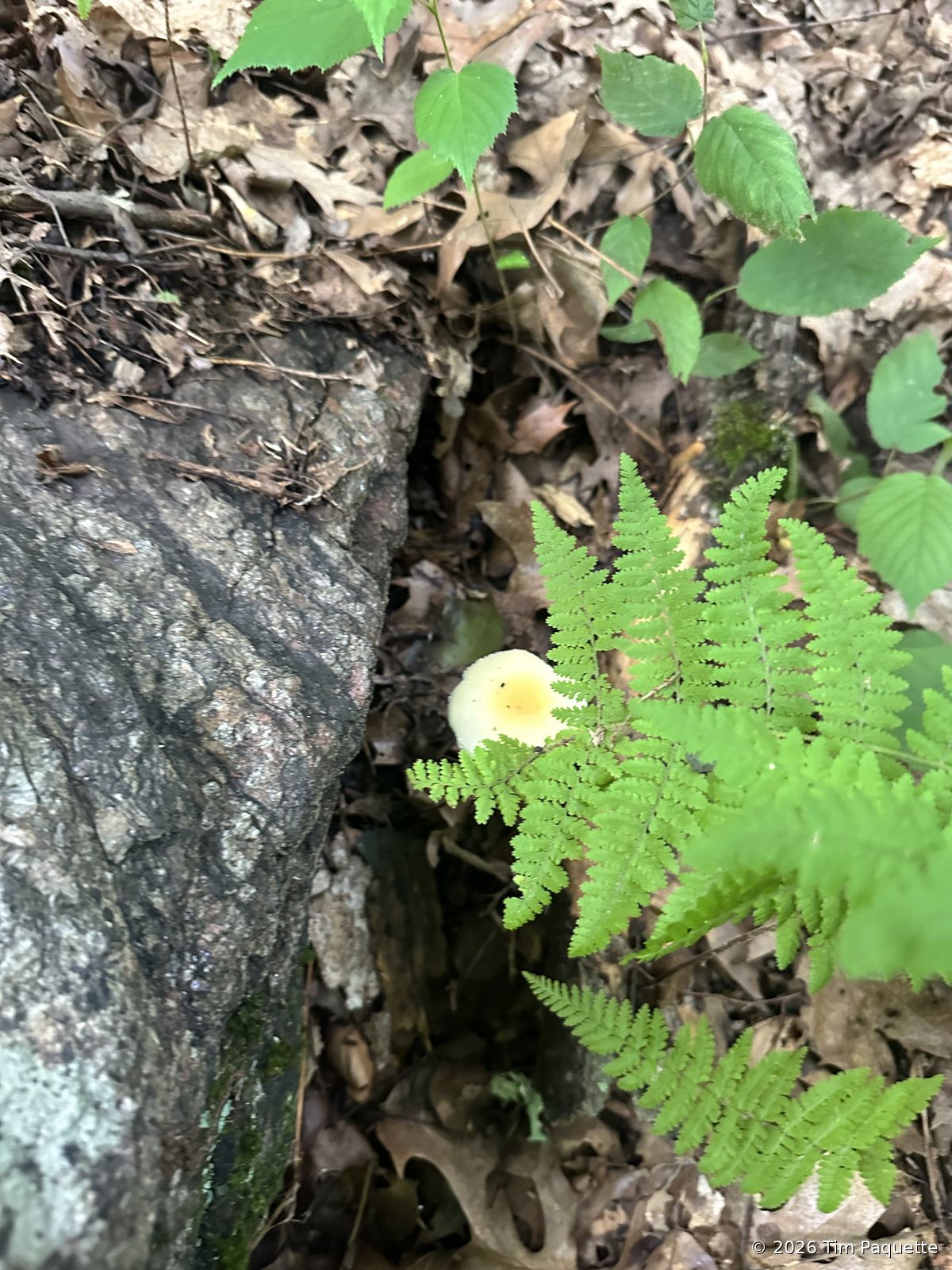 Small white agaric on a rotting logUnidentified small white agaric · Jul 31Low
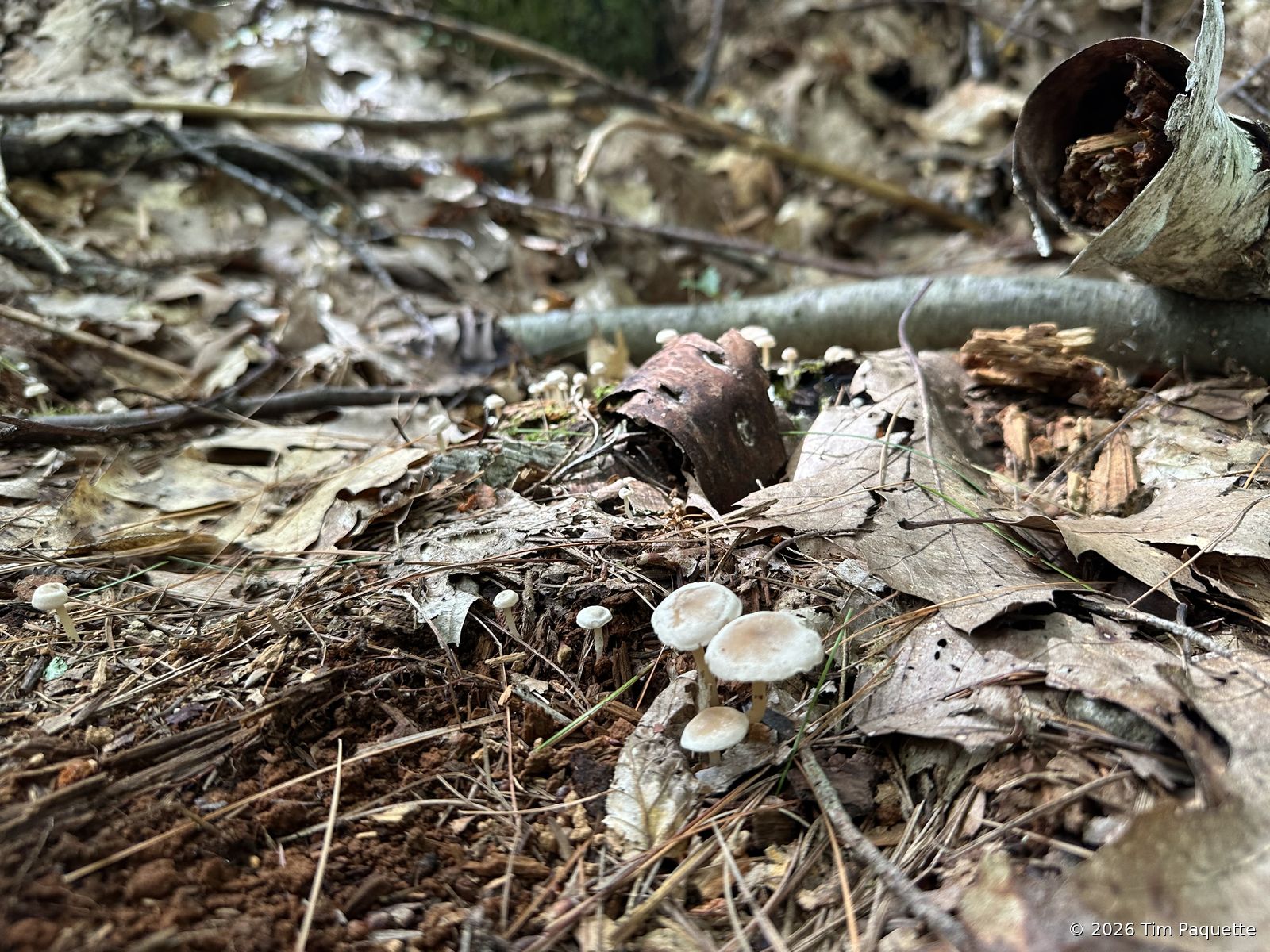 Troop of small pale agarics on a logUnidentified agaric · Aug 6Low
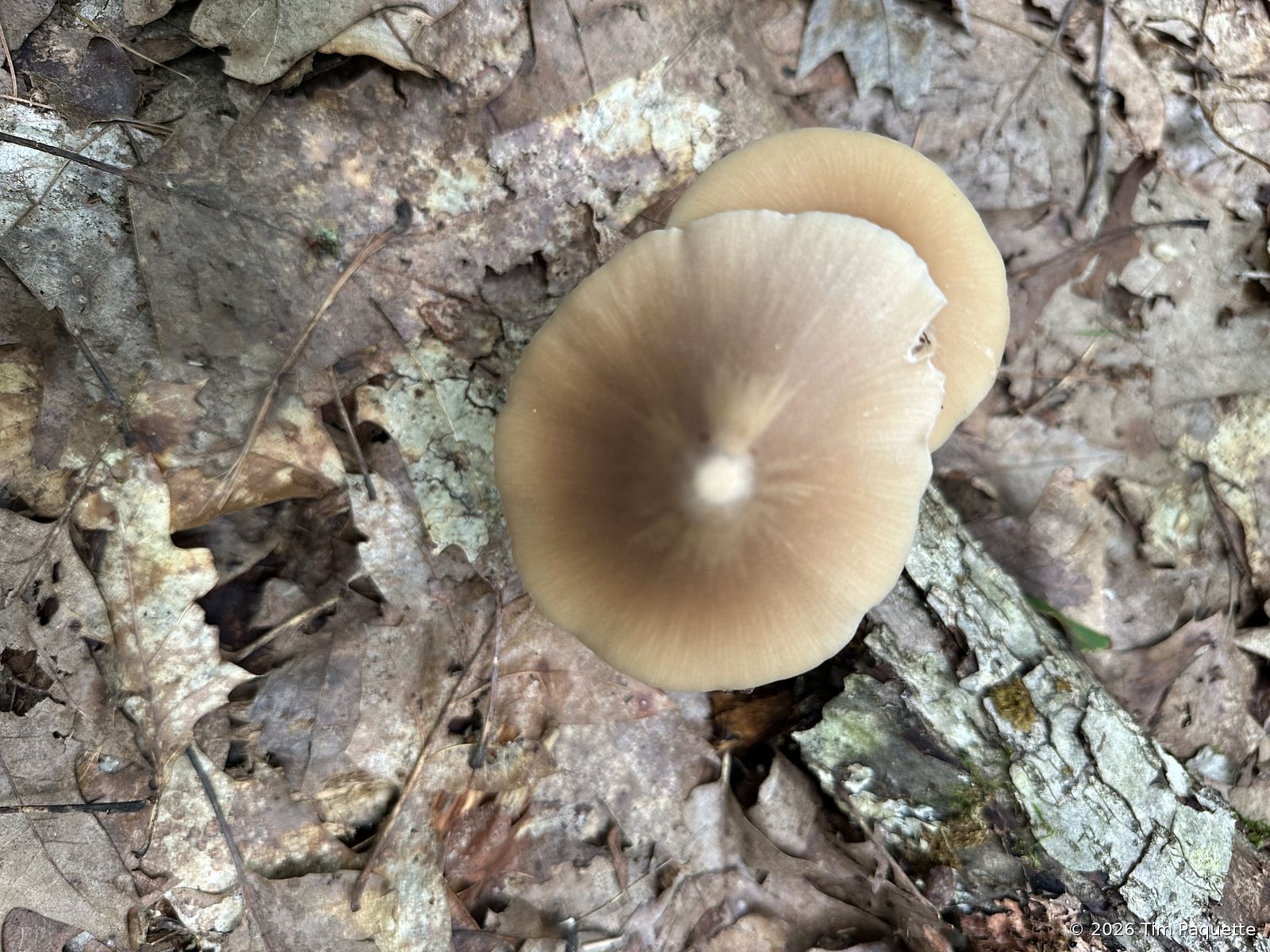 Striate-capped agaric on woodUnidentified agaric · Aug 6Low
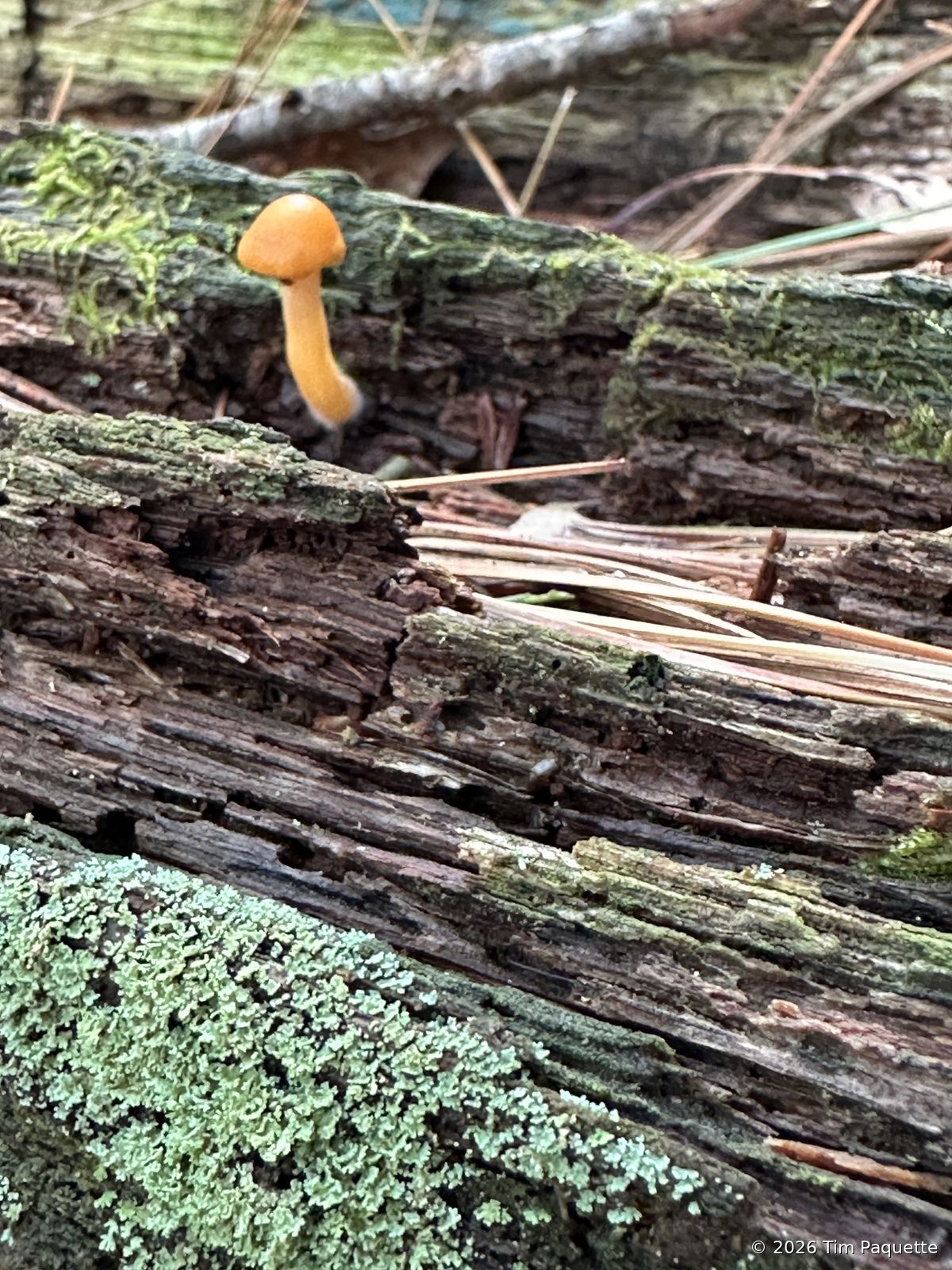 Small orange mushrooms on a rotting logUnidentified small orange agaric · Aug 6Low
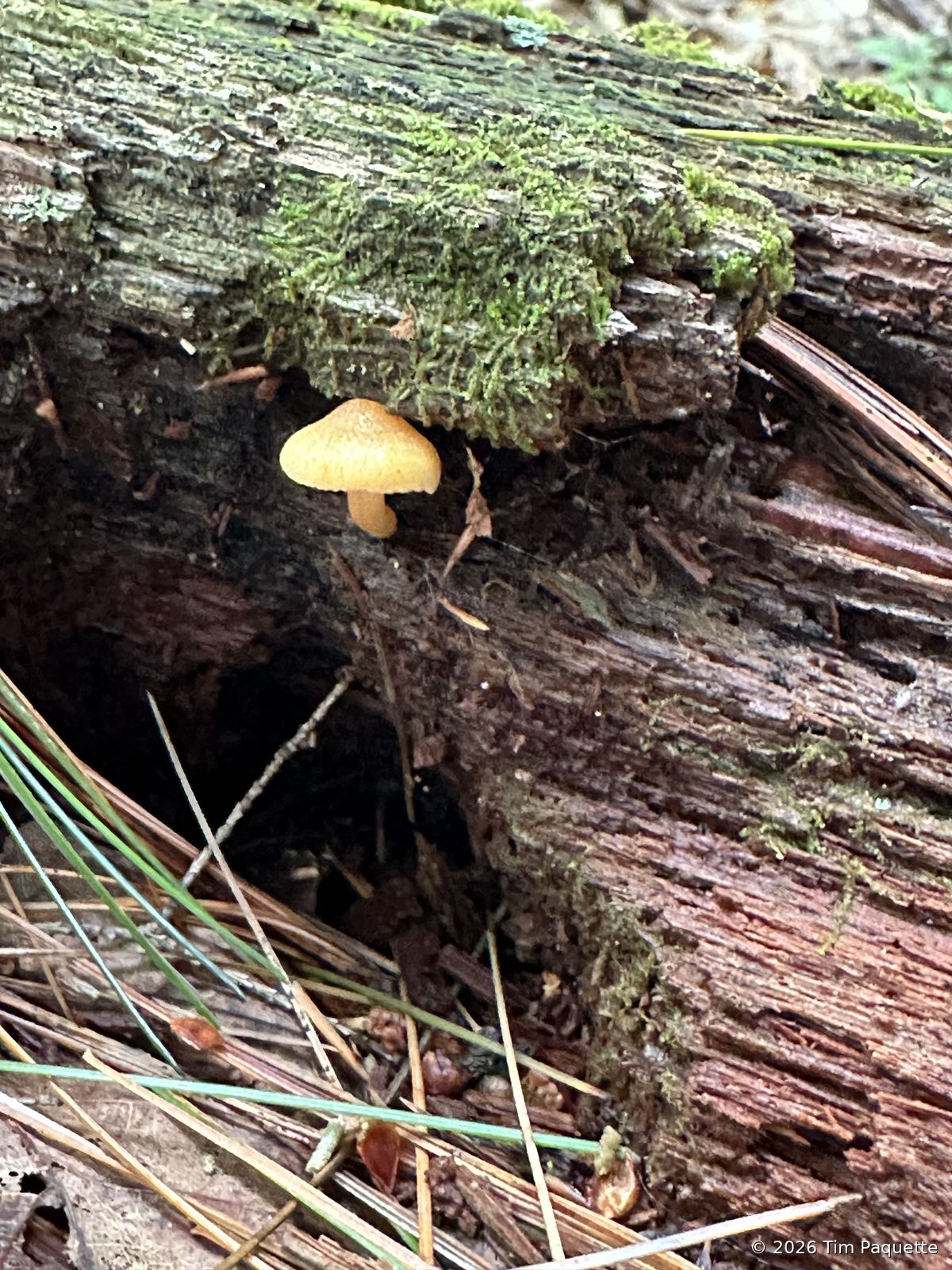 Small orange mushroom on a log — upperUnidentified small orange agaric · Aug 6Low
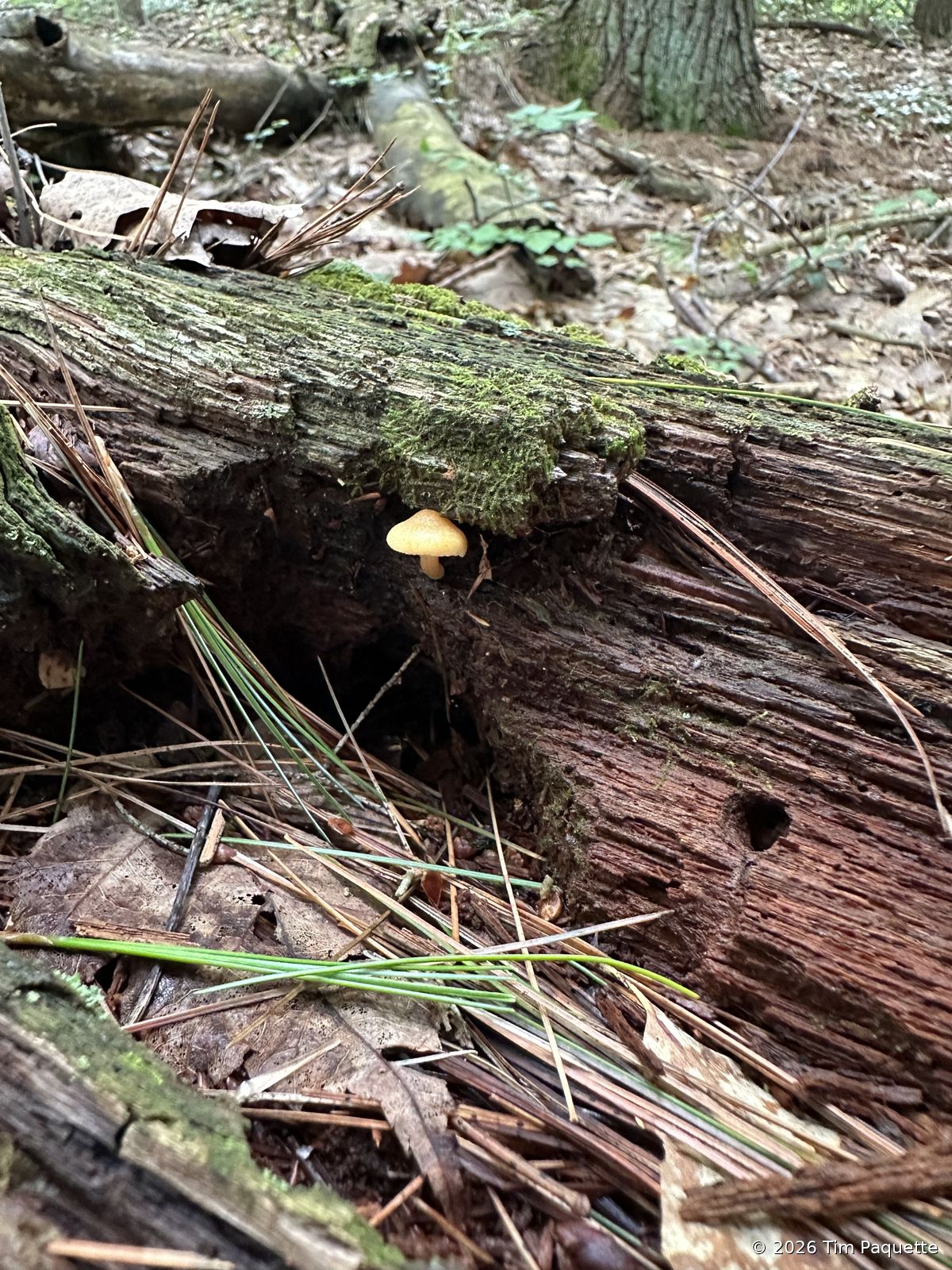 Small orange mushroom on a log — lowerUnidentified small orange agaric · Aug 6Low
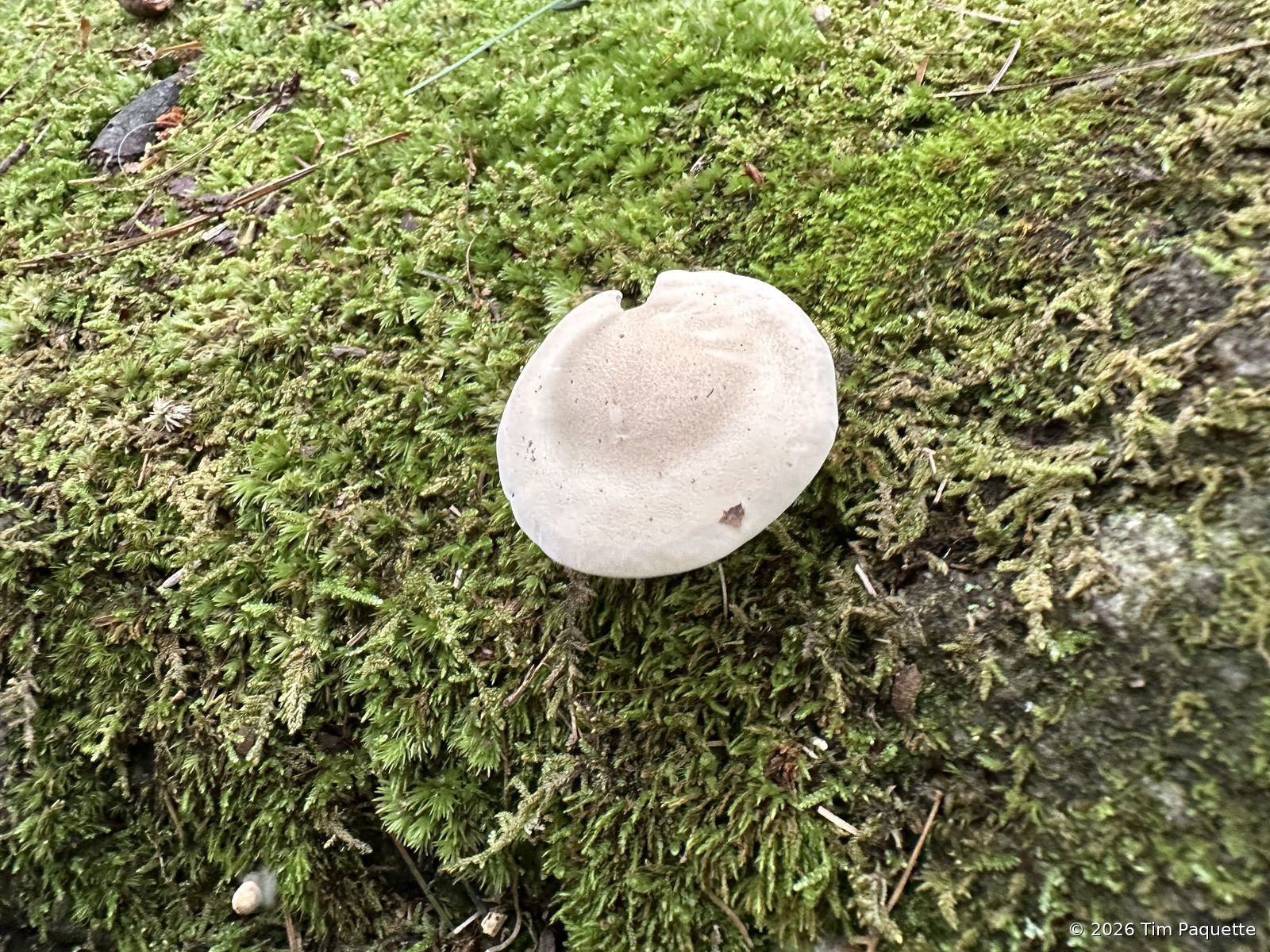 White cap on a mossy logUnidentified agaric · Aug 6Low
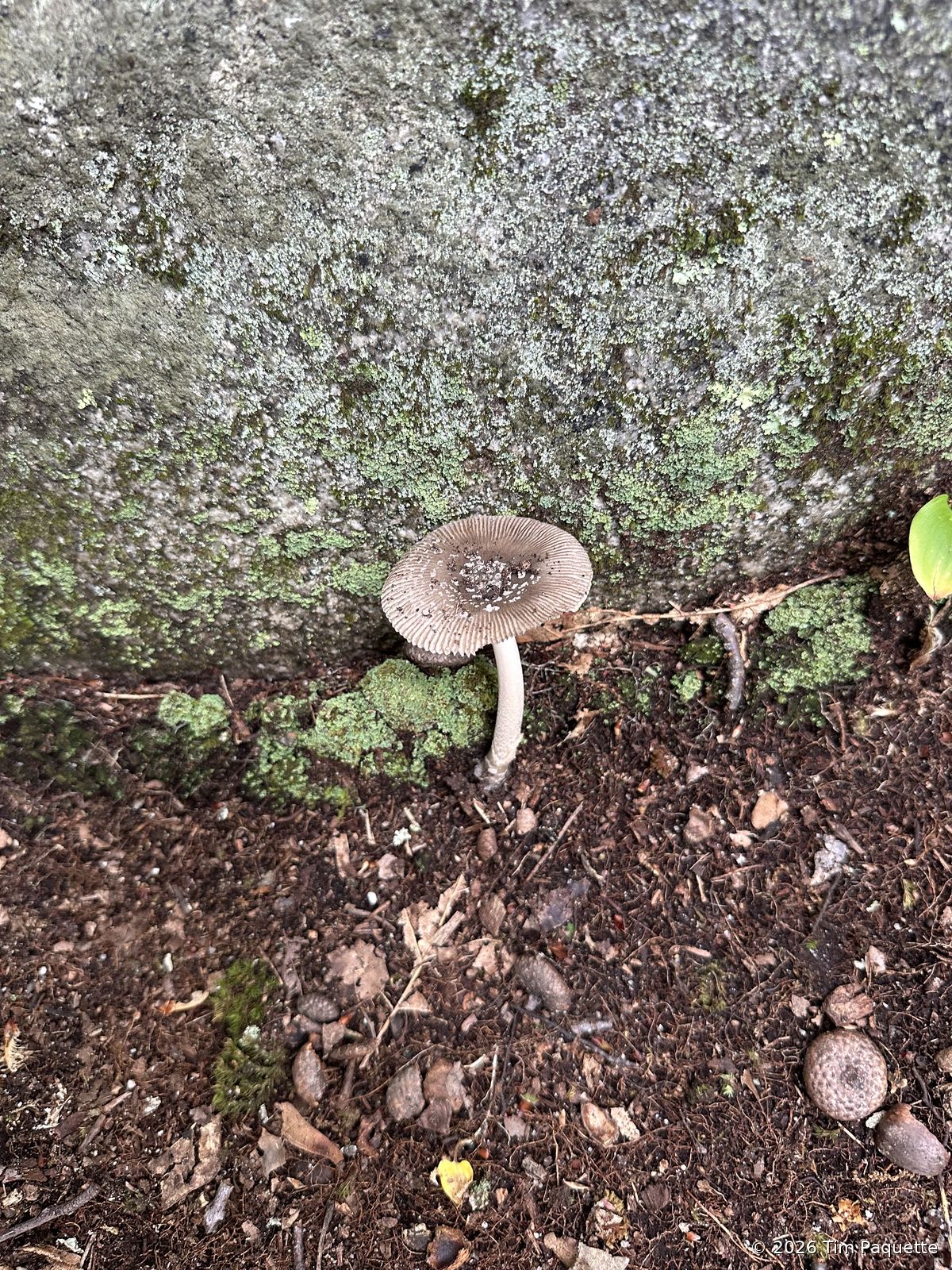 Tall grey-brown agaric by a boulderPluteus sp. · Aug 6Moderate